Best Luxury Travel for Couples: Architectural Frameworks & Execution
The high-end travel landscape for couples has fundamentally shifted over the past two decades. What was once defined by romantic clichés, predictable beach resorts, and standardized five-star amenities has evolved into a complex discipline centered on personalized experiences, friction mitigation, spatial privacy, and shared cognitive restorative dynamics. Best Luxury Travel for Couples. Designing journeys for two individuals requires a sophisticated understanding of dual-traveler logistics, where personal expectations, energy levels, and privacy considerations must be balanced seamlessly.
When evaluating high-end travel architecture for couples, success is rarely determined by cost alone. Instead, it relies on structural alignment: matching the operational pace and environmental setting of an itinerary to the specific relationship dynamics and lifestyle requirements of the partners. Whether navigating remote wilderness ecosystems via charter aviation, securing exclusive-use coastal estates, or curating behind-the-scenes cultural access in historic urban centers, every decision carries operational trade-offs that directly affect the quality of the shared experience.
Achieving seamless execution at this level requires moving past surface-level marketing materials to examine the underlying logistics of luxury travel design. It demands rigorous risk management, clear decision frameworks, transparent financial planning, and robust contingency planning. When executed with precision, the complex operational machinery behind the scenes disappears entirely, allowing travelers to focus on personal connection, shared discovery, and complete restorative relaxation.
This article provides a comprehensive reference for designing, evaluating, and implementing high-end travel for couples. By analyzing historical trends, operational frameworks, real-world failure modes, and systematic decision models, this guide serves as a definitive resource for travelers and industry specialists seeking to construct resilient, deeply meaningful journeys.
Understanding “Best Luxury Travel for Couples.”

To understand what constitutes the best luxury travel for couples, one must evaluate choices through an operational and human-centric lens rather than relying on generic industry definitions of romance. In conventional travel marketing, luxury for couples is frequently reduced to surface-level touches: rose petals, champagne on arrival, and isolated dining setups. In high-end travel architecture, however, true luxury for two is defined as the total elimination of logistical friction, absolute protection of shared time, and the alignment of physical surroundings with the psychological needs of both partners.
A frequent point of failure in couples’ travel planning is treating two travelers as a single functional unit with identical preferences, energy thresholds, and interests. While group travel distributes choices across a larger collective and solo travel offers complete individual autonomy, travel for couples requires continuous, subtle coordination. An itinerary that over-indexes on one partner’s passion—such as high-density urban museum visits or continuous high-intensity sports—without accounting for the other’s energy limits creates subtle friction that detracts from the shared experience.
Oversimplification in this sector also leads to the “luxury bubble” trap. Travelers pay high premiums for private villas or high-end resorts, only to find themselves constrained by rigid resort schedules, intrusive service staff, or poor local connectivity that fails to buffer them against transit delays and crowd congestion. Effective planning is predictive rather than reactive; it anticipates physical fatigue, manages public exposure, and builds buffer windows into every transition.
Ultimately, evaluating the best luxury travel for couples requires looking past decorative opulence to assess the underlying operational structure. A successful plan balances shared exploration with personal space, integrates robust risk contingencies, and ensures that time together remains unhurried and deeply fulfilling.
Deep Contextual Background: The Evolution of Dual-Traveler High-End Journeys
The historical trajectory of high-end travel for couples mirrors broader socio-economic shifts, advances in transportation technology, and changing perceptions of leisure and privacy.
1. The Era of Grand Palaces and Fixed Formalism (Late 19th to Mid-20th Century)
Historically, elite travel for couples was tied to rigid social structures and formal hospitality. Journeys such as the post-industrial “Honeymoon Express” or steamship passages across Europe and the Americas focused on grand, urban palace hotels and iconic mineral spas. Travel was slow, highly structured, and governed by strict social etiquette. Personalization was limited to hotel staff recognizing social standing, with little flexibility for individual activity preferences or dynamic schedule adjustments.
2. The Rise of Resort Enclaves and Island Isolation (Late 20th Century)
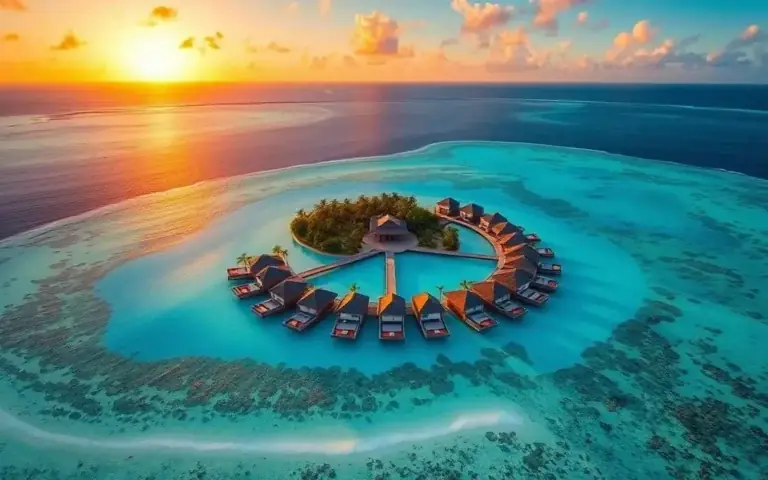
As commercial aviation expanded in the late 20th century, the luxury travel market pivoted toward tropical isolation and dedicated resort properties. The concept of the exclusive beach resort—characterized by overwater bungalows, gated privacy, and standardized luxury hardware—became the primary template for romantic travel. While this model offered high physical comfort and spatial privacy, it often isolated travelers from local culture and offered uniform, formulaic experiences that varied little across destinations.
3. The Era of Hyper-Customization and Experiential Rarity (21st Century)
Today, discerning couples seek itineraries defined by authenticity, uncommoditized access, and seamless execution. High-thread-count linens and five-star dining are now baseline expectations rather than key differentiators. Modern travel architecture focuses on private charter flights, off-market villa rentals, private wildlife conservancies, and exclusive cultural access. The objective has shifted from static rest toward dynamic, shared discovery, supported by invisible risk management and hyper-personalized service structures.
Conceptual Frameworks and Mental Models
Designing itineraries for two travelers requires structured analytical frameworks to balance competing preferences, energy envelopes, and physical constraints.
The Dual-Energy Envelope Model
This framework tracks the psychological and physical energy levels of both travelers independently throughout an itinerary.
-
Complementary Pacing: Scheduling high-intensity activities (e.g., long transit, active exploration, social events) during periods of peak energy for both partners.
-
Restorative Synchronization: Ensuring rest windows occur simultaneously, preventing scenarios where one traveler is exhausted while the other seeks activity.
-
Asymmetric Autonomy: Building optional, low-stakes solo time into the itinerary (e.g., one partner visits a spa while the other engages in private sports coaching) to avoid fatigue caused by constant proximity.
Limits of the Model: Requires honest self-assessment from both travelers before departure. Pushing through exhaustion to adhere to a pre-planned schedule undermines the effectiveness of the model.
The Access-Privacy Balance
This model plots trip components along two axes: high-access cultural/environmental engagement versus spatial privacy and security.
-
Public Access Nodes: Guided visits to historical sites, high-end urban dining, local market tours.
-
Private Isolation Nodes: Private island buyouts, deep wilderness camps, charter yachts.
-
Buffered Hybrid Nodes: After-hours museum tours, private dining rooms in iconic locations, VIP tarmac airport transfers.
Limits of the Model: Over-indexing on private isolation can lead to environment fatigue, while excess public access increases crowd friction and privacy risks for high-profile couples.
The Logistical Friction Ratio (LFR)
The LFR measures the amount of operational overhead (packing, airport security, vehicle shifts, check-in procedures) relative to stationary quality time at a destination.
-
High-Friction Architecture: Changing accommodations every 24 to 48 hours across multiple transport modes.
-
Low-Friction Architecture: Establishing a single base property or private charter vessel for 5 to 7 days, using hub-and-spoke excursion logistics via helicopter or private ground transport.
Limits of the Model: Staying in one place too long can reduce variety for couples who prefer rapid, multi-destination travel.
Key Categories and Variations
High-end travel options for couples fall into six primary categories, each offering distinct operational benefits, trade-offs, and service models.
-
Private Island & Estate Buyouts: Exclusive-use properties offering complete perimeter control, dedicated culinary and service teams, and absolute spatial privacy.
-
Expedition Megayacht & Maritime Charters: Mobile luxury accommodations providing access to coastal archipelagos, private dive spots, and secluded anchorages.
-
Remote Wilderness & Conservancy Lodges: High-end safari camps and wilderness retreats focused on wildlife conservation, outdoor adventure, and nature immersion.
-
Urban Cultural & Historical Immersion: Flagship luxury properties in major world capitals featuring private after-hours access to historical venues, curators, and fine dining.
-
Wellness & Longevity Sanctuaries: Specialized retreats offering personalized health assessments, regenerative therapies, and holistic relaxation in tranquil environments.
-
Transcontinental Private Jet Circuits: Multi-destination global or regional tours using fixed-wing private aircraft to connect remote experiences seamlessly.
Comparative Evaluation of Core Travel Categories
| Travel Category | Privacy Level | Logistical Complexity | Schedule Flexibility | Primary Trade-Off | Lead Time Required |
| Private Island Buyout | Maximum | Moderate | High (Local) | Fixed geographical location | 6–12 Months |
| Superyacht Charter | Maximum | High | High (Maritime) | Weather dependent | 6–12 Months |
| Wilderness Lodge | Very High | High (Transport) | Moderate | Rigorous daily schedules | 3–9 Months |
| Urban Flagship Stay | Moderate | Low to Moderate | High | Public exposure in common areas | 1–3 Months |
| Wellness Sanctuary | High | Low | Low (Structured) | Structured daily routines | 2–6 Months |
| Private Jet Circuit | High | Very High | Moderate to High | Flight slot & permit constraints | 6–12 Months |
Decision Logic for Itinerary Design
Planners use clear decision logic based on primary travel goals to select the appropriate model:
-
If the main objective is absolute seclusion, complete rest, and custom schedule control: Prioritize Private Island Buyouts or Dedicated Villa Estates.
-
If the goal is exploring varied coastal environments while keeping a single luxury accommodation: Select Expedition Megayacht Charters.
-
If the focus is deep immersion in nature and wildlife with expert guidance: Choose Exclusive-Use Wilderness Conservancies.
-
If seeking intellectual stimulation, culinary arts, and historical depth: Focus on Urban Cultural Immersion with private after-hours access.
Detailed Real-World Scenarios
Remote Safari and Beach Combination (East Africa & Seychelles)
-
Context: A couple seeks a ten-day journey combining active wildlife viewing in Kenya with coastal relaxation in the Seychelles, requiring high privacy and zero commercial airport friction.
-
Operational Setup:
-
Chartered Cessna Grand Caravan for direct airstrip transfers between safari camps, bypassing regional terminals.
-
Exclusive-use bush villa on a private conservancy to ensure private game drives and dedicated culinary staff.
-
Direct private jet charter from Nairobi FBO to Mahé, followed by a helicopter transfer directly to a private island resort helipad.
-
-
Failure Mode Encountered: Sudden weather shifts cause thick low-altitude fog at the safari airstrip, grounding fixed-wing charter flights on the day of the Seychelles connection.
-
Resolution: The management team activates a backup plan. A twin-engine, IFR-rated helicopter is dispatched from a nearby high-altitude hub to transport the couple below the cloud deck to an international airport with an all-weather runway, preserving their private jet flight slot to Mahé.
Multi-City European Cultural Tour (Florence, Paris, London)
-
Context: A high-profile couple requests a seven-day cultural itinerary in Europe during peak summer, requiring complete privacy from public crowds and flexible daily schedules.
-
Operational Setup:
-
Private suite terminals (e.g., VIP Wing at Florence, Windsor Suite at Heathrow) for all airport arrivals and departures.
-
After-hours, private viewings secured for the Uffizi Gallery and the Musée d’Orsay with head curators.
-
Dedicated executive ground transport with security drivers cleared for restricted urban zones.
-
-
Failure Mode Encountered: Unannounced civic protests close main transit corridors in central Paris, threatening to block access to a private evening venue opening.
-
Resolution: The local logistics team coordinates with city authorities to use secondary, security-vetted river launch routes along the Seine, bypassing road congestion entirely and reaching the private venue entry on time.
Marine Expedition in the Indonesian Archipelago (Raja Ampat)
-
Context: A couple seeking active marine exploration, scuba diving, and total island isolation over eight days.
-
Operational Setup:
-
Exclusive charter of a 180-foot traditional Phinisi yacht equipped with modern navigation systems, a dive center, and an onboard masseuse.
-
Satellite-linked weather tracking and advance port agent coordination for remote island clearances.
-
-
Failure Mode Encountered: Strong seasonal swell renders the primary dive site and planned anchorage unsafe for swimming and tender operations.
-
Resolution: The captain executes a dynamic rerouting protocol, navigating overnight to a protected lee-side archipelago. The onboard cruise director arranges private land excursions to a remote island village, maintaining an active, engaging schedule while waiting for sea conditions to clear.
Planning, Cost, and Resource Dynamics
The financial structure of high-end couples’ travel extends beyond basic hotel and transport bookings. It involves positioning fees, operational retainers, provisioning allowances, and non-refundable deposit schedules.
Direct vs. Indirect Cost Breakdown
-
Direct Costs: Accommodation rates, private aviation hourly charges, yacht charter base rates, and venue buyouts.
-
Indirect Costs: Aircraft repositioning hours, FBO handling fees, Advanced Provisioning Allowances (APA on yacht charters, typically 30–35% of base rate), security detail expenses, and international diplomatic clearance processing.
-
Opportunity Costs: Booking high-demand, single-inventory properties or private yachts 9 to 12 months in advance locks up capital in non-refundable deposits, requiring clear travel schedules.
Financial Planning Matrix for High-End Travel Modes
| Investment Tier | Typical Daily Rate Range | Key Hidden Costs | Typical Staff-to-Guest Ratio | Deposit & Cancellation Terms |
| Tier 1: Bespoke Luxury | $3,000 – $8,000 / day | Commercial upgrades, private tours, transfers | 2:1 | 30–60-day cancellation terms |
| Tier 2: Fully Private Villa / Charter | $8,000 – $25,000 / day | Provisions (APA), aircraft repositioning, taxes | 4:1 | 60–90-day non-refundable |
| Tier 3: Exclusive Island / Superyacht | $25,000 – $100,000+ / day | Fuel surcharges, dockage fees, crew gratuities | 6:1 or higher | 100% non-refundable at 90 days |
Tools, Strategies, and Support Systems
Executing flawless high-end travel relies on specialized tools, intelligence networks, and operational protocols operating behind the scenes.
-
Aviation Tracking & Slot Management Software: Real-time tracking platforms (e.g., FlightAware Global, JetInsight) used to monitor private aircraft positioning, weather delays, and airport slot approvals worldwide.
-
Maritime Charter Operations Port Networks: Direct coordination with local port agents to clear customs, secure private moorings, and source high-grade provisions in remote waters.
-
Encrypted Communication Systems: Secure messaging networks (e.g., Signal, private VPNs) used by ground teams, security details, and concierges to share real-time schedule updates securely.
-
Real-Time Risk Intelligence Services: Subscription services (e.g., Crisis24, International SOS) providing live updates on political stability, health alerts, and extreme weather events.
-
VIP Airport Suite Networks: Access to private VIP terminals that handle border control, baggage transfer, and tarmac transfers directly to private vehicles away from public terminals.
-
Global Air Ambulance and Medical Retainers: Specialized retainers (e.g., MedAire, Global Rescue) ensuring direct access to emergency air evacuations and medical advice worldwide.
Risk Landscape and Failure Modes
High-end travel itineraries are vulnerable to specific failure modes. High budgets do not guarantee immunity from disruptions; complex itineraries with multiple private transfers can actually create new points of failure.
Failure Mode Taxonomy
-
Single Node Dependency: Relying on a single helicopter, specific guide, or sole local permit with no standby backup. A single mechanical or personal delay can disrupt the rest of the itinerary.
-
Over-Scheduling Fatigue: Packing too many high-access experiences into a short window. This leads to physical exhaustion, turning an enjoyable vacation into a demanding schedule.
-
Regulatory & Permitting Delays: Sudden permit revocations, drone restrictions, or unexpected airspace closures in foreign jurisdictions.
-
Privacy Breaches: Inadvertent exposure of location details, accommodations, or schedules by unvetted local staff or loose security protocols.
Governance, Maintenance, and Long-Term Adaptation
High-end itineraries require active monitoring and adjustment before, during, and after execution to maintain quality and security.
Pre-Trip Audit Protocol (T-30 to T-7 Days)
-
Re-verify all passport validity, entry visas, health declarations, and private permits.
-
Conduct advance site audits of accommodations, transport units, and private dining venues via local representatives.
-
Confirm fallback options for weather-sensitive elements (e.g., private flights, boat excursions).
Live Auditing and Mid-Trip Adjustments
-
Hold brief daily syncs between lead concierges, ground managers, and private drivers to adjust schedules based on real-time conditions.
-
Monitor physical energy levels daily, actively scaling back minor activities if transit density causes cumulative fatigue.
Layered Operational Execution Checklist
-
Pre-Departure Phase:
-
Tarmac access permissions confirmed with FBO handling teams.
-
Luggage independently tracked and cross-tagged.
-
Ground transport drivers vetted, with primary and secondary routes scouted.
-
-
On-Site Execution Phase:
-
Private entrances and dedicated elevator controls confirmed at accommodations.
-
Dietary preferences and medical requirements reviewed directly with the executive chef.
-
Secondary secure communications link verified with lead property management.
-
-
Transit Phase:
-
Aircraft or vessel positioning re-confirmed four hours before departure.
-
Backup ground transport placed on standby status.
-
Expedited border control clearance confirmed at destination.
-
Measurement, Tracking, and Evaluation
Evaluating the success of a luxury travel plan requires tracking both quantitative operational metrics and qualitative personal satisfaction markers.
Key Performance Indicators
-
Transit Friction Ratio (TFR): Percentage of total travel time spent in non-value-added transit processes (waiting at terminals, ground delays, admin checks). Target: under 5% of total trip time.
-
Schedule Flexibility Index (SFI): The speed and ease with which an itinerary node can be altered or canceled without major financial loss or structural disruption.
-
Cognitive Restorative Index (CRI): A post-trip qualitative evaluation measuring how unhurried, relaxed, and mentally restored the travelers felt throughout the trip.
Operational Documentation Examples
Daily Logistical Briefing
-
Date & Location: 18 June 2026 | Amalfi Coast, Italy
-
08:30 CET: Private Helicopter Transfer from Naples Capodichino (FBO) to Ravello Helipad. Aircraft: AgustaWestland AW109. Luggage transported separately via secure van.
-
09:15 CET: Private Fast-Track Check-In at Suite Villa Margherita. In-suite registration handled directly by the General Manager.
-
11:00 CET: Private Boat Charter departure from Amalfi Harbor to Capri. Vessel: Riva 48′ Dolly. Private skipper and steward on board.
-
Risk Mitigation: High afternoon coastal winds forecast. Alternative land-based route to private vineyard in Tramonti confirmed on standby.
Medical and Emergency Response Protocol
-
Primary Contact: On-call flight physician via MedAire retainer.
-
Action Steps:
-
Incident reported to lead travel architect within 15 minutes.
-
Local private clinic in regional hub alerted for direct admission, bypassing public emergency rooms.
-
Standby air ambulance cleared for immediate transfer if tertiary care is required.
-
Secure satellite phone link established between local medical team and personal physician.
-
Common Misconceptions and Oversimplifications
Higher Costs Guarantee a Perfect Experience
Capital secures superior physical hardware (suites, yachts, jets), but cannot buy immunity from weather disruptions, administrative delays, or poor local coordination. Flawless execution comes from system design, contingency planning, and local relationships.
Maximizing Activities Delivers Maximum Value
Over-scheduling is the most common flaw in high-end travel. Packing an itinerary with constant private tours and bookings leads to exhaustion. The highest luxury is often unstructured time in an extraordinary setting.
Private Aviation Solves All Transport Challenges
While private jets offer comfort and flexibility, they remain subject to air traffic control slots, crew duty limits, weather groundings, and international permit processing. Assuming a private jet eliminates all transit delays leads to fragile itineraries.
Resort Concierge Teams Can Manage Complex Itineraries
Hotel concierges excel at on-site reservations and local bookings, but usually lack the capacity, global reach, and risk management tools required to manage complex, multi-destination journeys across air, land, and sea.
Ethical, Environmental, and Practical Considerations
As high-end travel expands, balancing personal luxury with environmental stewardship and community support has become essential.
Aviation Footprint and Carbon Mitigation
Private aviation carries a significantly higher carbon footprint per passenger than commercial modes. Modern travel design increasingly incorporates Sustainable Aviation Fuel (SAF) offsets, carbon removal investments, and direct contributions to local ecosystem restoration projects.
Supporting Destination Communities
High-end travel can inadvertently lock capital within international hotel chains and platform operators. Leading travel architects address this by working directly with local conservation trusts, regional artisans, indigenous guides, and family-owned properties, ensuring capital directly supports host communities.
Conclusion
Designing the best luxury travel for couples requires balancing logistical precision, risk management, and human empathy. True luxury is not measured by material excess or rigid schedules, but by the seamless, invisible orchestration of complex systems that protect personal time, reduce friction, and foster shared experiences.
As global transit becomes more complex, the difference between simple luxury booking and deep travel architecture will continue to grow. The most successful journeys will be those built on sound operational frameworks, clear decision logic, robust contingencies, and a deep respect for both the travelers’ well-being and the destinations they explore.